

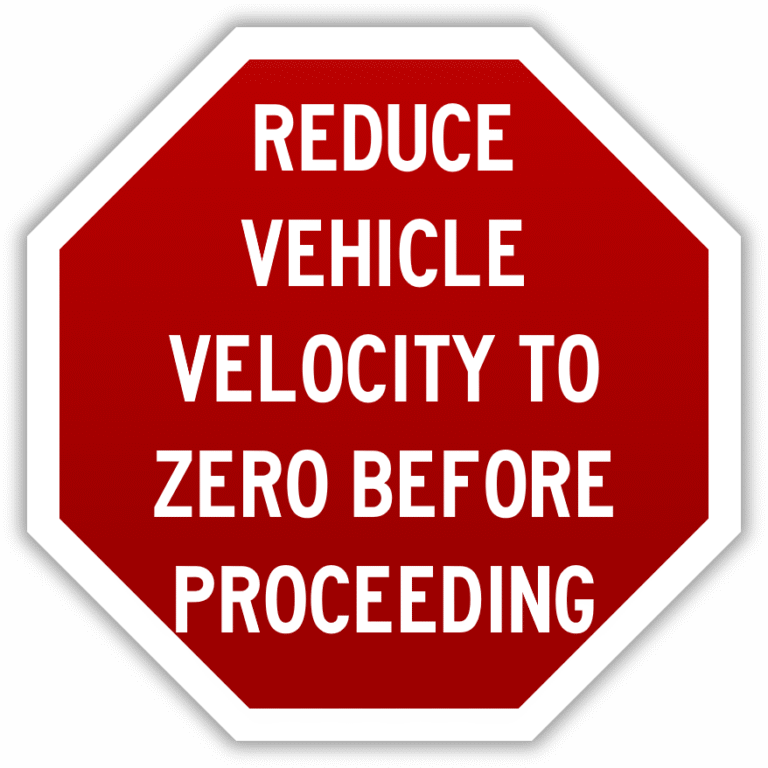
Recently, I gave a training for about 50 researchers on how to structure their thinking to write clearer, more compelling abstracts. The first step? Identify your key message in a single sentence.
From there, we discussed how the key message, objective, problem statement, and the title should all be written in plain language, in a way that a friend or colleague outside your field could understand. That means stripping out the jargon and the “scientific-y” language.
This statement led someone to ask, “But aren’t we supposed to make it sound a certain way?”
Ah, yes, the classic worry: If it doesn’t sound professional (for scientists, that means overly formal and scientific), will people take it seriously?
Let’s think this through.
What does it mean to “sound professional” anyway?
A few of the many definitions of professional are:
- Engaged in an activity as a paid occupation
- Competent or skilled in a particular activity
- Conforming to the technical or ethical standards of a profession
If you’re a working scientist, you’ve already got definitions one and two covered. It’s the third one that causes trouble. Many researchers interpret it to mean, “I must sound formal, technical, and academic, or I won’t look like a real scientist.”
That’s not a requirement; it’s a stereotype. More importantly, it’s a stereotype that actively works against you.
Want people to believe your findings? Make your ideas easy to understand.
It turns out there’s solid science behind this. A study from Ohio State University (Bullock et al. 2019) showed that people who read scientific information filled with jargony language rated it as harder to understand, even if the jargon was explained.
The difficulty in processing jargon-filled information is associated with negative feelings, such as uncertainty and risk. These emotional reactions lead to more scrutiny of the research due to lack of confidence in its results (read: more questions, requests for information, and—worst of all—more checking with colleagues to verify that what you’re saying is correct).
If that weren’t enough, people are also likely to associate the negative feelings they have regarding a difficult-to-understand with negative (albeit subconscious) feelings toward you, the presenter.
On the flip side, when scientific information is presented in plain, clear language, it’s easier to process, and audiences are less likely to seek out additional information to be persuaded.
Why? Because easily understanding something complicated feels good. And when something feels good, our brains assume it’s safe and familiar. That’s exactly what you want when sharing your work. Especially if you are asking an audience to do something, such as fund your research or adopt your ideas.
Here’s the most “professional” thing you can do:
Simplify your language, and avoid overly complex jargon so that your audience can process your information easily.
What does that look like? Here are a couple of examples:
❌ Don’t say | ✅ Do say |
An insect of the Formicidae family engaged in proactive resource accumulation behavior during the temperate season. In contrast, a member of the Acrididae family allocated time to nonproductive acoustic signaling and leisure activity. | All summer, the ant worked hard storing food while the grasshopper sang and relaxed. |
We analyzed EQ-5D-5L baseline data of a cluster-randomized, controlled intervention trial, administered as a self- and proxy-proxy-assessment of n=174 dyads (people living with dementia and their caregivers). | We analyzed data assessing the quality of life of people living with dementia collected from 174 pairs: those with dementia and their caregivers. |
Same content. Different experience.
The takeaway
If your audience has to work too hard to understand your point, they won’t. Or worse, they might walk away less convinced than when you started.
So before you submit that abstract or deliver your next presentation, ask yourself the following questions:
- Can a colleague outside my specialty understand this?
- Would a friend “get the gist” after one read-through?
- Am I using language that clarifies my message, or am I mimicking what I think scientists are supposed to sound like?
Remember, the harder your presentation is to follow, the less smart people think you are. Not because they’re judging your science—but because they can’t follow your thinking.
 Join me on July 17 (10am ET/5pm CET) for a free LinkedIn webinar: “Confused stakeholders don’t say “yes”: 3 steps to make your research persuasive.”
Sign up here.
I’ll show you the 3 essential features of a persuasive message so your research will gain influence and inspire action.